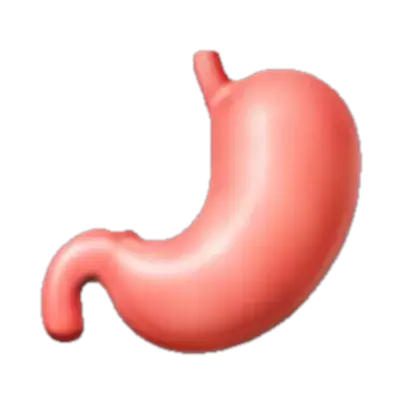
The stomach is a muscular, stretchy pouch that mixes food with acid and enzymes, turning each meal into a thick liquid called chyme before passing it to the small intestine.
~1–1.5 L
Comfortable capacity
pH 1.5–3.5
Stomach acid
2–4 hrs
Typical emptying time
Where is the stomach located?
In the upper left abdomen, between the esophagus and the small intestine.
What does the stomach do?
Stores food temporarily
Churns and mixes food mechanically
Begins protein digestion with pepsin
Kills many microbes with acid
Releases chyme gradually into the intestine
Key parts of the stomach
Fundus
The upper, rounded area that holds food and gas.
Body
The main central region where most mixing happens.
Antrum
The lower part that grinds food and pushes it on.
Pyloric sphincter
A muscular valve that controls emptying.
How to keep your stomach healthy
Eat smaller meals and chew thoroughly
Limit very spicy, fatty or acidic foods if they bother you
Avoid lying down right after eating
Limit alcohol and don't smoke
Use anti-inflammatory painkillers only as directed
Holistic approach
Holistic Ways to Support Your Stomach
Gentle everyday practices plus three traditional herbs, with honest notes on evidence and safety.
Educational note: This page is for general anatomy education and does not provide medical diagnosis or treatment advice. Talk to a healthcare professional about any concerns.